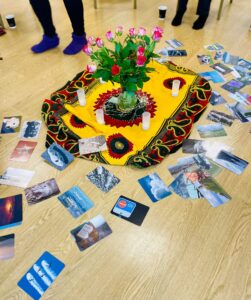
I had the huge privilege to be involved in the launch of the Umbrella Project in Milton Keynes last month: a celebration of our great neurodiversity as a human race. There are 400 beautiful umbrellas on display in Midsummer Place, the largest installation of its kind in the UK so far. The installation and the reflective, quiet space that accompanies it have all been designed to celebrate how everyone’s brain is different, just as our tastes are; that some brains are classed as ‘neurotypical’, and others as ‘neurodivergent’; and that all are brilliant, valuable and important.
It is a fantastic display to see, but it makes me sad that it is needed. And here is more evidence of why it is still so needed: lately the media has been flooded with stories about overdiagnosis.
Headlines claim that too many people are being labelled with ADHD, autism, or other neurodivergent traits.
Articles suggest that diagnoses are being handed out too freely, that normal variations in behaviour are being medicalised, and that the system is overwhelmed. But these arguments miss the real issue, neurodivergent people are not receiving the support they need.
We are struggling because society is still failing to understand, accept, and accommodate the neurodiversity that we should be celebrating.

The Real Problem: Lack of Awareness and Support for ADHD and Autism
The real crisis is not overdiagnosis. It is that too many people are left in the dark about neurodiversity, including their own.
Too many people go through life not understanding how their mind works, feeling like they are failing because they struggle with certain tasks that others find easy, without realising that their brains simply work differently.

Instead of being empowered to harness their creativity, hyperfocus, and ability to think outside the box, they are left battling sensory sensitivities, overthinking, and struggling with repetitive tasks, without any support to manage these challenges, and work with their brains instead of against them.
This is what led me to keep reaching out to the GP for depression…when the depression was caused by not being able to live the life that I thought was acceptable by society.
A STRESS-Filled World

At the same time, people are desperate for a diagnosis and medication because the world is incredibly hard right now. Stress at work, isolation, and a lack of support for families have made day-to-day life overwhelming. Women, in particular, are carrying a disproportionate burden—juggling household responsibilities, employment, and the exhausting task of advocating for children with SEND (Special Educational Needs and Disabilities) in an increasingly rigid and stressful school system.
But instead of receiving proper support for their neurodivergent brains (let alone their children’s!), many are being fobbed off, told their struggles aren’t severe enough, or left waiting years for an assessment while their mental health deteriorates.
Year upon year of pushing through the stress, and masking the pain of fighting and hiding their neurodivergence, can eventually lead to further health problems and the inability to support themselves or stay in work.
How with the latest budget cuts threatening PIP ( Personal Independence Payments)…it feels like things are getting worse.
PIP is there to support disabilities, and now, those with mental health condition and neurodiversity are bearing the brunt of the PIP cuts…leaving more people with anxiety about how they will cope.
Everyone Is Needed in Society, we thrive together !!!

The world does not suffer from too many diagnoses, it suffers from too little acceptance.
Every person has a unique way of thinking, processing, and contributing. When we dismiss neurodivergence as an epidemic of overdiagnosis, we risk losing the incredible talents and perspectives that neurodivergent individuals bring to society.
We need engineers who think in patterns, artists who see the world differently, teachers who can connect with students in unconventional ways, and leaders who innovate by questioning norms. Embracing neurodiversity is not just about fairness—it’s about making our world stronger, more creative, and more capable, using the power of all these brilliant, diverse brains to do it.
The World needs to adjust and embrace neurodiversity
The solution is not to tighten diagnostic criteria to prevent so-called overdiagnosis, but to broaden society’s understanding of neurodiversity and ensure that support is available before crisis point. Instead of trying to fit neurodivergent individuals into a rigid system, we must redesign the system to be more flexible, inclusive, and supportive from the start.
This means:
- Encouraging people to understand their own brains and how they work, so they can make choices that embrace their strengths while protecting their nervous systems
- Educating parents, teachers, and employers about different ways of thinking and learning
- Ensuring early intervention and support systems are available and accessible to all families
- Promoting workplace policies that allow neurodivergent individuals to thrive
- Creating social spaces that welcome and accommodate all types of brains, not just those that conform to neurotypical expectations.
Hope for the Future...working together
Change is happening. More families are speaking out, more workplaces are embracing neurodivergent employees, and more schools are recognising the need for diverse learning strategies. But there is still a long way to go.
The future will be brighter when we stop worrying about overdiagnosis and start focusing on understanding, acceptance, and real support: exactly what the Umbrella Project has been designed to do.
Find out more about the Umbrella Project here – and please do visit with your family, and talk about your brilliant brains. It is in the Midsummer place part of the Shopping centre in Milton keynes.
No family should be left in the dark. It’s time to turn on the lights and build a world where every brain is valued, every child is supported, and every person—regardless of how they think—has the opportunity to thrive.
Visit the Neurodiversity HUB in the Midsummer Place (opposite Five guys) for information but also some quiet respite.


If you’re tired of trying to fit into a world that doesn’t work for your brain, let’s talk. I offer 1:1 ADHD coaching to help you find clarity, ease, and confidence. But also always happy to chat with people who want to see where they need to go next, signposting to the right services.
✨ Book a free curiosity call – no pressure, just a chat.✨
You don’t have to do this alone.